MLOps
Beyond the Lab: Understanding MLOps and Why It's Crucial for AI Success
January 21, 2026
4 min read
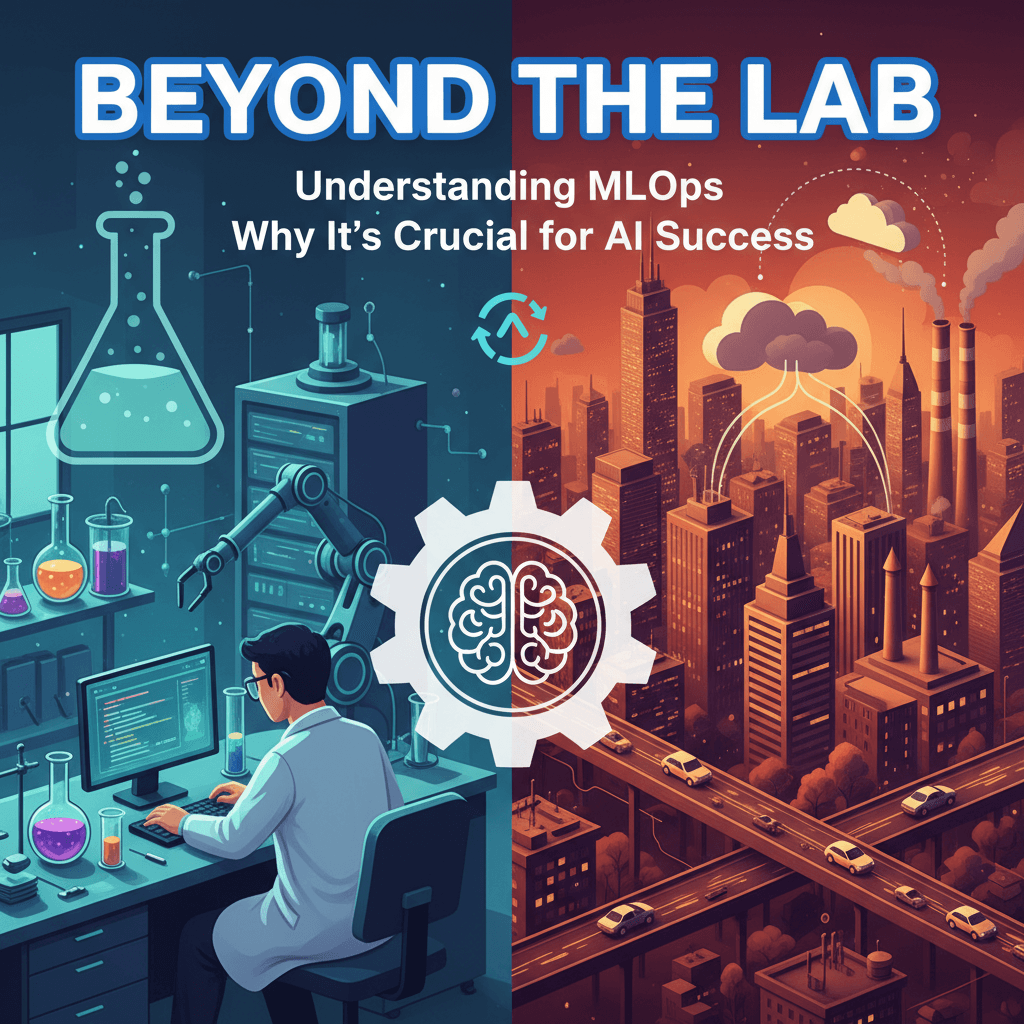
At its core, MLOps is a set of practices that aims to automate and streamline the lifecycle of machine learning models. This lifecycle includes everything from data collection and preparation, model training and evaluation, to deployment, monitoring, and retraining. Without MLOps, deploying an AI model can be a slow, manual, and error-prone process. Data scientists might develop a fantastic model, but getting it integrated into an application, maintaining its performance over time, and quickly updating it becomes a monumental task.
MLOps addresses several key pain points. Firstly, unlike traditional software, AI models are highly dependent on data. Changes in input data can cause a model's performance to degrade—a phenomenon known as 'model drift.' MLOps establishes robust monitoring systems to detect such drifts and triggers automated retraining processes. Secondly, it fosters collaboration. Data scientists, ML engineers, and operations teams often work in silos. MLOps provides a shared framework and tools that enable these teams to work together seamlessly, from experimentation to production.
The fundamental pillars of MLOps include:
* **Automated ML Pipelines:** Building automated pipelines for data ingestion, model training, evaluation, and deployment. This ensures consistency and reduces manual effort.
* **Model Versioning and Governance:** Tracking different versions of models, data, and code. This allows for reproducibility and easier rollback if issues arise. Imagine needing to know exactly what data and code were used to train a specific model version from six months ago—MLOps makes this possible.
* **Continuous Integration/Continuous Delivery (CI/CD) for ML:** Extending traditional CI/CD principles to machine learning. This means models can be continuously integrated into the application and delivered to production with confidence, allowing for rapid iteration and updates.
* **Model Monitoring and Alerting:** Continuously observing model performance in production, checking for data quality issues, prediction accuracy degradation, and setting up alerts for anomalies. For example, if a fraud detection model suddenly starts missing a lot of known fraudulent transactions, MLOps monitoring would flag this immediately.
By embracing MLOps, organizations can significantly accelerate the deployment of new AI features, improve the reliability and robustness of their AI systems, and ensure that their models continue to deliver value long after their initial deployment. It transforms AI from a series of isolated experiments into a sustainable, scalable, and integral part of business operations. For anyone looking to move beyond prototype AI models to production-grade intelligent applications, understanding and implementing MLOps practices is no longer optional—it's essential for long-term success.