Blog & Insights
Expert insights on software development, technology trends, and business growth
Autonomous AI Agents: The Next Evolution in Smart Technology
The world of Artificial Intelligence is evolving at an incredible pace. We've all seen large language models (LLMs) like ChatGPT generate text and answer questions. But what if AI could do more than just respond to prompts? What if it could set its own goals, plan steps, execute tasks, and even learn from its mistakes, all without constant human intervention? This is the promise of Autonomous AI Agents. At its core, an autonomous AI agent is a system designed to operate independently to achieve specific objectives. Unlike traditional AI, which typically performs a single task or responds directly to a human command, an agent has the ability to: 1. **Understand Goals**: Interpret high-level instructions into concrete, actionable objectives. 2. **Plan**: Break down complex goals into smaller, manageable steps. 3. **Execute**: Utilize tools and resources to perform the planned steps. 4. **Observe and Learn**: Monitor its progress, evaluate outcomes, and adjust its strategy if necessary, effectively learning from its environment and actions. Think of it this way: asking an LLM "Write a blog post about AI agents" is like giving a single instruction. An autonomous agent, however, might be told "Increase user engagement on our tech blog." It would then devise a plan: research trending topics, write several blog posts, schedule their publication, monitor their performance, and iterate based on the data, all on its own. Autonomous AI agents typically consist of several interconnected parts: * **Large Language Model (LLM) Core**: This serves as the agent's "brain," enabling it to understand natural language, reason, and generate plans. * **Memory**: This can be short-term (context of the current task) or long-term (knowledge acquired over time), allowing the agent to remember past experiences and learnings. * **Tools**: These are external functions or APIs that the agent can call upon to interact with the real world or specific software. Examples include web search, code interpreters, email clients, or database access. * **Planning and Reflection Modules**: These components allow the agent to continuously refine its goals, break them into sub-tasks, monitor execution, and self-correct when faced with obstacles or errors. The potential impact of autonomous AI agents is vast: * **Software Development**: Imagine an agent that can write, test, and debug code based on a high-level requirement, pushing updates to a repository autonomously. * **Data Analysis**: Agents could collect data, identify trends, generate reports, and even suggest business strategies, all without a data scientist's constant oversight. * **Personal Productivity**: Beyond simple chatbots, agents could manage your calendar, prioritize emails, book appointments, and research information for complex projects. * **Business Operations**: Automating complex workflows, from supply chain optimization to customer service resolution, enabling businesses to operate with unprecedented efficiency. While incredibly powerful, autonomous AI agents also present challenges. Ensuring their reliability, managing potential biases, and establishing clear ethical guidelines are crucial. The complexity of their decision-making processes can sometimes make them hard to audit or understand when things go wrong. Nevertheless, the development of autonomous AI agents represents a significant leap forward in artificial intelligence. They are poised to transform how we work, interact with technology, and solve complex problems, moving us closer to a future where AI systems can truly act as intelligent, independent collaborators.
Platform Engineering: Empowering Developers with Self-Service IT
Platform Engineering is rapidly emerging as a critical discipline in modern software development, often seen as the next evolution of DevOps. While DevOps emphasizes culture, collaboration, and automation, Platform Engineering focuses on building and maintaining the tools and services that enable developers to efficiently build, deploy, and operate their applications. At its core, Platform Engineering creates an "Internal Developer Platform" (IDP). Think of an IDP as a curated set of self-service tools, infrastructure, and workflows that streamline the entire software delivery lifecycle. Instead of developers individually figuring out how to provision a database, set up CI/CD pipelines, or configure monitoring, the platform team provides "golden paths" or "paved roads" – predefined, optimized, and secure ways to achieve these tasks with minimal effort. Why is Platform Engineering gaining so much traction? The primary driver is developer productivity and experience. In complex, cloud-native environments, developers often spend significant time on operational tasks that distract them from writing code and innovating. An IDP reduces this cognitive load by abstracting away infrastructure complexities and providing ready-to-use solutions for common needs. This allows product development teams to focus on delivering business value faster. Key components of an Internal Developer Platform often include self-service portals for provisioning resources, standardized CI/CD templates, robust observability tools, secure secret management, and pre-configured deployment environments. The platform team acts as a service provider to the product teams, ensuring these tools are reliable, scalable, and up-to-date. It's important to differentiate Platform Engineering from traditional DevOps. DevOps is a set of practices and a culture that promotes collaboration between development and operations teams. Platform Engineering is a concrete implementation strategy that helps organizations achieve their DevOps goals more effectively and at scale. It provides the "how" through standardized, automated platforms. Instead of every development team building and maintaining their own operational tooling, a dedicated platform team centralizes this effort, ensuring consistency, governance, and efficiency across the organization. For organizations, this translates into faster time-to-market, improved application reliability, enhanced security posture, and greater operational efficiency. For individual developers, it means less friction, more autonomy within defined guardrails, and more time spent on creative problem-solving. Adopting Platform Engineering requires a shift in mindset and organizational structure, but the benefits in terms of developer satisfaction and business agility are becoming increasingly clear.
Unlocking Enterprise AI: A Practical Guide to Retrieval Augmented Generation (RAG)
Generative AI, embodied by tools like ChatGPT, has captivated the world with its ability to create text, code, and images. However, a common challenge surfaces when these powerful models are asked to provide information specific to a company's internal documents, real-time data, or highly specialized knowledge. They might "hallucinate" (make up facts), provide outdated information, or simply state they don't know. This is where Retrieval Augmented Generation, or RAG, steps in as a game-changer for enterprise AI applications. RAG is a technique that combines the strength of large language models (LLMs) with the precision of information retrieval systems. Think of it like giving an LLM an open-book exam. Instead of relying solely on its pre-trained knowledge, the RAG approach first searches a specific, trusted knowledge base for relevant information, and then uses that retrieved context to formulate a much more accurate and relevant answer. It’s a two-step process: retrieve, then generate. Why is RAG so important for practical AI deployment? Firstly, it drastically reduces the chances of hallucinations by grounding the LLM's responses in verifiable data. Secondly, it allows LLMs to interact with proprietary, up-to-date, or domain-specific information that wasn't part of their original training data. This means businesses can build AI applications that understand their unique policies, product catalogs, or legal documents. Thirdly, RAG enhances the transparency and explainability of AI responses, as it can often cite the source documents from which it drew its information. Finally, it can be more cost-effective than constantly fine-tuning an LLM with new data, as the retrieval mechanism handles the freshness of information. How does RAG actually work? The process typically involves a few key stages. First, your private or domain-specific data (e.g., company manuals, reports, articles) is processed and indexed. This often involves converting text into numerical representations called 'embeddings' and storing them in a 'vector database,' which is optimized for fast similarity searches. When a user asks a question, the system first retrieves the most relevant chunks of information from this indexed data. These retrieved pieces of context are then fed alongside the user's original query into the LLM. The LLM then uses this augmented prompt to generate a well-informed and accurate response. Real-world applications of RAG are vast and impactful. Imagine a customer support chatbot that can instantly pull answers from your latest product documentation and internal FAQs, providing precise details without needing human intervention. Or a legal department AI that can quickly summarize relevant clauses from thousands of contracts. Healthcare professionals could use it to query vast amounts of medical research for specific patient conditions. It's ideal for any scenario where an LLM needs to be highly accurate and informed by specific, constantly evolving information. Getting started with RAG is becoming increasingly accessible. Developers can leverage open-source frameworks like LangChain or LlamaIndex, which simplify the integration of LLMs with various data sources and vector databases. Popular vector database options include Pinecone, Weaviate, and Chroma, among others, each offering different features and scalability. The best way to begin is to identify a clear problem within your organization that could benefit from an AI system grounded in specific data, and then experiment with a small, manageable dataset. In conclusion, while large language models offer incredible generative power, RAG provides the crucial missing link to make them reliable, trustworthy, and practical for enterprise use. By enabling LLMs to intelligently access and incorporate external, up-to-date knowledge, RAG empowers businesses to build truly intelligent applications that solve real-world problems with accuracy and confidence.
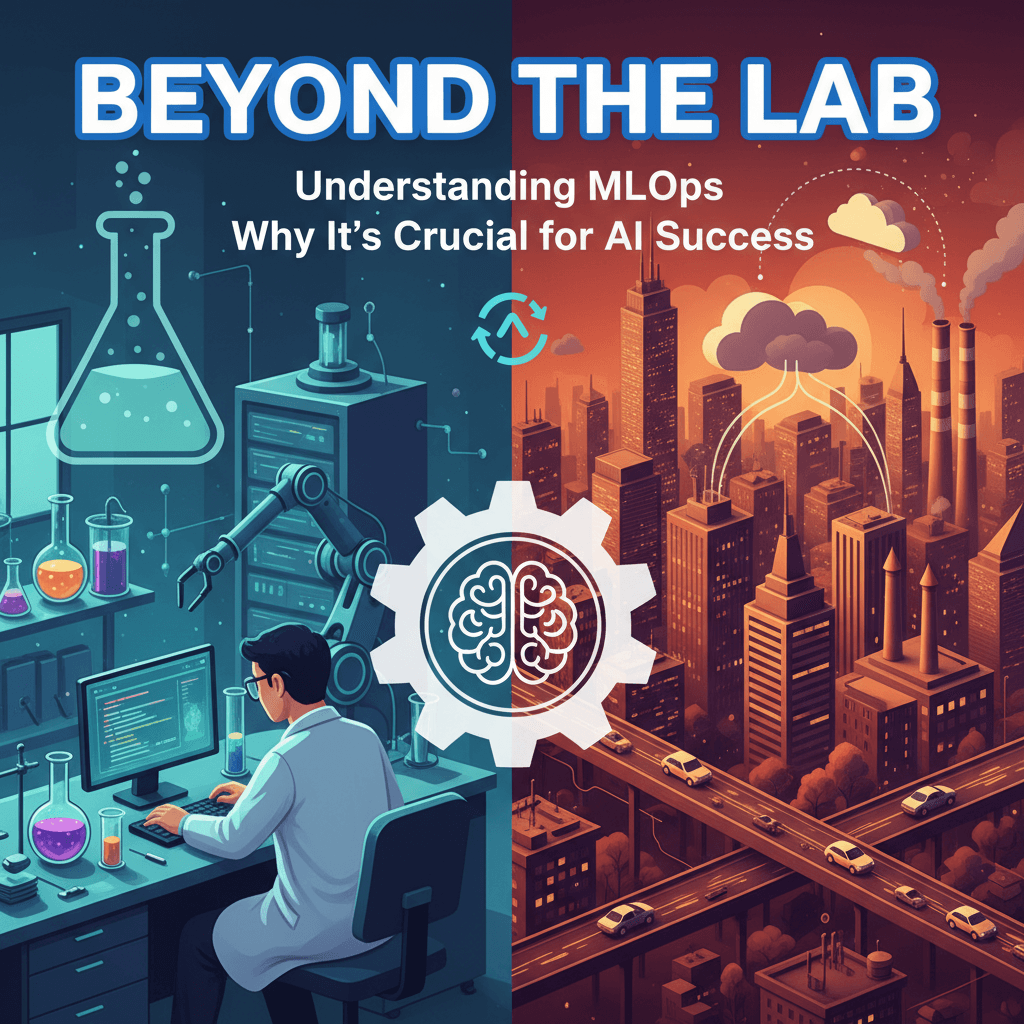
Beyond the Lab: Understanding MLOps and Why It's Crucial for AI Success
The world of Artificial Intelligence has moved rapidly from research labs to real-world applications. Yet, deploying and managing these complex AI models reliably and at scale presents unique challenges. This is where MLOps, or Machine Learning Operations, comes into play. Think of MLOps as the bridge that connects the innovative work of data scientists with the operational rigor of software engineering, ensuring that AI models not only work in theory but also perform effectively and consistently in production environments. At its core, MLOps is a set of practices that aims to automate and streamline the lifecycle of machine learning models. This lifecycle includes everything from data collection and preparation, model training and evaluation, to deployment, monitoring, and retraining. Without MLOps, deploying an AI model can be a slow, manual, and error-prone process. Data scientists might develop a fantastic model, but getting it integrated into an application, maintaining its performance over time, and quickly updating it becomes a monumental task. MLOps addresses several key pain points. Firstly, unlike traditional software, AI models are highly dependent on data. Changes in input data can cause a model's performance to degrade—a phenomenon known as 'model drift.' MLOps establishes robust monitoring systems to detect such drifts and triggers automated retraining processes. Secondly, it fosters collaboration. Data scientists, ML engineers, and operations teams often work in silos. MLOps provides a shared framework and tools that enable these teams to work together seamlessly, from experimentation to production. The fundamental pillars of MLOps include: * **Automated ML Pipelines:** Building automated pipelines for data ingestion, model training, evaluation, and deployment. This ensures consistency and reduces manual effort. * **Model Versioning and Governance:** Tracking different versions of models, data, and code. This allows for reproducibility and easier rollback if issues arise. Imagine needing to know exactly what data and code were used to train a specific model version from six months ago—MLOps makes this possible. * **Continuous Integration/Continuous Delivery (CI/CD) for ML:** Extending traditional CI/CD principles to machine learning. This means models can be continuously integrated into the application and delivered to production with confidence, allowing for rapid iteration and updates. * **Model Monitoring and Alerting:** Continuously observing model performance in production, checking for data quality issues, prediction accuracy degradation, and setting up alerts for anomalies. For example, if a fraud detection model suddenly starts missing a lot of known fraudulent transactions, MLOps monitoring would flag this immediately. By embracing MLOps, organizations can significantly accelerate the deployment of new AI features, improve the reliability and robustness of their AI systems, and ensure that their models continue to deliver value long after their initial deployment. It transforms AI from a series of isolated experiments into a sustainable, scalable, and integral part of business operations. For anyone looking to move beyond prototype AI models to production-grade intelligent applications, understanding and implementing MLOps practices is no longer optional—it's essential for long-term success.
Generative AI: Your New Co-Pilot in Software Development
Generative Artificial Intelligence (AI) has rapidly moved from research labs to practical applications, profoundly impacting various industries. In the realm of software development, it's not just a buzzword; it's emerging as a powerful co-pilot, fundamentally changing how developers work. Far beyond simple chatbots, Generative AI tools are becoming integral to the coding workflow, enhancing efficiency and quality across the entire software development lifecycle. The integration of Generative AI is reshaping several key areas of development. One of the most visible impacts is code generation. Tools powered by Generative AI can suggest code snippets, complete functions, or even generate entire scripts based on natural language prompts. This dramatically speeds up initial coding phases and reduces boilerplate tasks. Similarly, it aids in code refactoring and optimization, identifying inefficient patterns or security vulnerabilities and proposing cleaner, more performant alternatives. For instance, an AI might suggest a more Pythonic way to write a loop or point out a potential SQL injection vulnerability. Debugging, traditionally a time-consuming task, also benefits significantly. Generative AI can explain complex error messages in plain language and propose potential fixes, helping developers quickly pinpoint and resolve issues. This extends to test case generation, where AI can automatically create unit tests or integration tests based on existing code or requirements, ensuring broader test coverage with less manual effort. Lastly, documentation can be largely automated; from generating in-line comments and README files to comprehensive API documentation, AI ensures that projects are well-documented and maintainable. The advantages for developers are clear. First, there's a significant boost in productivity, allowing engineers to write code faster and spend less time on repetitive or mundane tasks. This directly leads to improved code quality, as AI-assisted development often results in fewer bugs, adherence to best practices, and more optimized solutions. Furthermore, Generative AI acts as an excellent learning and exploration tool, enabling developers to quickly understand new programming languages, frameworks, or complex APIs by asking questions and getting instant, contextualized explanations and examples. Ultimately, this allows developers to focus on higher-value tasks, shifting their energy from routine coding to architectural design, complex problem-solving, and innovation. While the benefits are compelling, it's crucial to approach Generative AI with a balanced perspective. Accuracy and "hallucinations" remain a concern; AI models can sometimes generate incorrect or non-optimal code, requiring careful human review and validation. Security and privacy are also paramount, as feeding proprietary code into public AI models raises questions about data handling and intellectual property. Moreover, there's the risk of over-reliance, where developers might lose some core problem-solving and critical thinking skills if they depend too heavily on AI for every task. In conclusion, Generative AI is not here to replace developers but to augment their capabilities. It serves as an incredibly powerful assistant, streamlining workflows, accelerating innovation, and democratizing access to complex coding knowledge. The future of software development will undoubtedly involve a symbiotic relationship between human creativity and AI-driven efficiency, leading to more robust, efficient, and sophisticated software solutions. Developers who embrace these tools while maintaining their critical oversight will be at the forefront of this evolving landscape.
Platform Engineering: Boosting Developer Productivity and Happiness with Internal Platforms
Platform Engineering is rapidly emerging as a critical discipline within modern software development. It's about empowering development teams by providing them with a streamlined, self-service experience to build, deploy, and operate applications. Think of it as building an "internal developer platform" (IDP) that abstracts away infrastructure complexity, allowing developers to focus purely on writing application code and delivering business value. This approach bridges the gap between traditional DevOps practices and the urgent need for greater developer autonomy and productivity in complex cloud-native environments. Why are so many organizations embracing this approach? The primary drivers are often developer experience and operational efficiency. In today's intricate software ecosystems, developers can spend a significant portion of their time dealing with infrastructure provisioning, configuration, and troubleshooting rather than actual feature development. This "cognitive load" often leads to burnout, slower delivery cycles, and inconsistent deployments. Platform Engineering aims to reduce this burden by standardizing tools, processes, and infrastructure patterns, making development work more enjoyable and significantly more productive. An effective IDP isn't a single, monolithic tool, but rather a carefully curated collection of integrated tools and services designed to work together seamlessly. Common components often include self-service portals (dashboards or CLI tools for environment provisioning and application deployment), "golden paths" or templates (pre-configured application starters, infrastructure-as-code modules, and CI/CD pipeline definitions that encapsulate best practices), centralized observability (integrated logging, monitoring, and tracing), automated policy enforcement (for security, compliance, and cost management), and a comprehensive service catalog. The goal is to provide sensible defaults and paved roads, allowing developers to easily follow best practices while retaining the flexibility to deviate when necessary. The benefits of a well-implemented IDP are substantial and measurable. Organizations typically see significantly faster time-to-market as developers can provision and deploy applications much more quickly. There's a notable reduction in operational overhead, as standardization and automation free up infrastructure teams to focus on platform improvements rather than repetitive, manual tasks. Critically, developer satisfaction improves dramatically; less frustration with infrastructure means happier, more engaged, and ultimately more productive teams. Furthermore, an IDP leads to enhanced consistency and reliability, as standardized deployments reduce errors and improve system stability, alongside better built-in security and compliance. Adopting Platform Engineering is best approached as an evolutionary journey, not a sudden revolution. Start small and iteratively build your platform. Begin by identifying the biggest pain points for your development teams related to infrastructure and deployment processes. Then, focus on creating a "golden path" for one common use case, such as deploying a new microservice, and build a streamlined experience around it. Treat your IDP as a product, with your developers as the primary customers; continuously gather feedback, iterate, and evolve the platform based on their needs. Crucially, foster a culture of collaboration where development and operations teams work closely together to co-create solutions. This collaborative effort is key to providing robust, opinionated yet flexible solutions that accelerate software delivery and profoundly improve the quality of developer life.
Unlocking Efficiency: How Generative AI is Revolutionizing Software Development
Generative AI, once a futuristic concept, is now deeply integrated into various industries, and its impact on software development is particularly profound. Beyond just automating mundane tasks, these intelligent tools are actively assisting developers in creating, debugging, and maintaining code, fundamentally changing how software is built. This isn't about AI replacing developers, but empowering them with highly sophisticated assistants. One of the most visible applications is code generation and completion. Tools like GitHub Copilot, built on large language models, can suggest entire lines or blocks of code based on comments, existing code patterns, or even just a function signature. This significantly speeds up the initial coding phase and reduces the mental load on developers. For example, if you start typing a function to “fetch user data,” the AI might suggest the entire API call structure, including error handling. Beyond just writing code, Generative AI excels in debugging and error resolution. It can analyze stack traces and log files to pinpoint potential issues, suggest fixes, and even explain complex errors in simpler terms. Imagine getting an explanation for a cryptic error message along with potential solutions, rather than spending hours sifting through documentation and forums. Automated test case generation is another powerful use. Manually writing comprehensive unit tests can be time-consuming. AI can analyze your code and generate a suite of relevant test cases, including edge cases, helping ensure code robustness and reducing bugs before deployment. Similarly, documentation generation can be streamlined, with AI transforming code comments and structures into coherent user manuals or API references. The primary benefit is a significant boost in productivity and efficiency. Developers can spend less time on repetitive coding tasks and more time on complex problem-solving, architectural design, and innovation. It also helps reduce cognitive load and errors, as the AI acts as a smart pair programmer, catching potential mistakes and offering best practices. For new developers, these tools can act as an accelerated learning aid, exposing them to common patterns and solutions quickly. While powerful, Generative AI tools are not without their caveats. “Hallucinations” – where the AI generates plausible but incorrect or non-existent code – are a common issue, necessitating vigilant human oversight. Security concerns arise when using AI-generated code, as it might inadvertently introduce vulnerabilities if not properly reviewed. Ethical considerations around intellectual property and biased code generation also need attention. Developers must treat AI suggestions as starting points, always verifying, testing, and understanding the code before integrating it. For developers, the key is to embrace these tools as collaborators. Learning to prompt effectively, understanding the AI's limitations, and maintaining a strong foundation in core programming principles will be crucial. The future of software development involves a symbiotic relationship between human creativity and AI-powered assistance, allowing teams to deliver higher quality software faster and more efficiently than ever before.
Stay Updated
Subscribe to our newsletter for the latest insights and updates